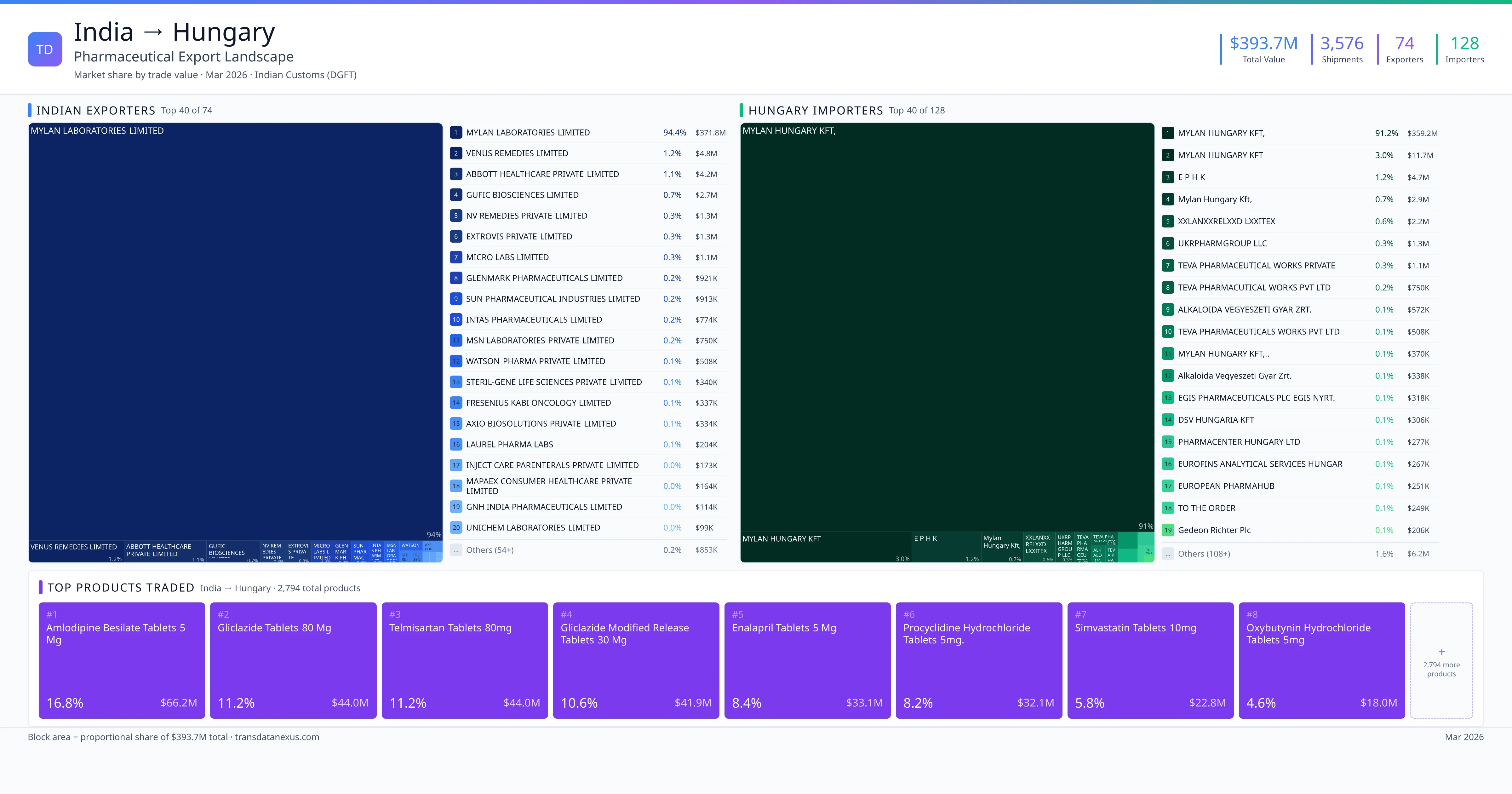
Pharmaceutical shipments from India to Hungary primarily utilize sea and air transport, each with distinct transit times and logistical considerations.
Sea Freight: The most common sea route involves departing from major Indian ports such as Mumbai (Nhava Sheva) and Chennai (Ennore), proceeding through the Suez Canal, and arriving at European ports like Rotterdam. For instance, a direct service from Ennore to Rotterdam takes approximately 33 days, with vessels departing 1-2 times a week. From Rotterdam, goods are typically transported by rail or road to Hungary, adding an additional 2-3 days to the overall transit time.
Air Freight: Air transport offers a faster alternative, with transit times ranging from 2 to 6 business days, depending on the specific route and carrier. Budapest Ferenc Liszt International Airport (BUD) serves as Hungary's primary cargo hub, handling a significant volume of pharmaceutical imports. Air freight is particularly advantageous for time-sensitive or high-value pharmaceutical products.
Impact of Red Sea Disruptions: Disruptions in the Red Sea, such as the blockage of the Suez Canal, can significantly impact sea freight routes, leading to delays and increased costs. For example, the 2021 Suez Canal blockage resulted in substantial shipping delays worldwide. While air freight is less susceptible to such disruptions, it may experience indirect effects due to increased demand and potential congestion at alternative ports.