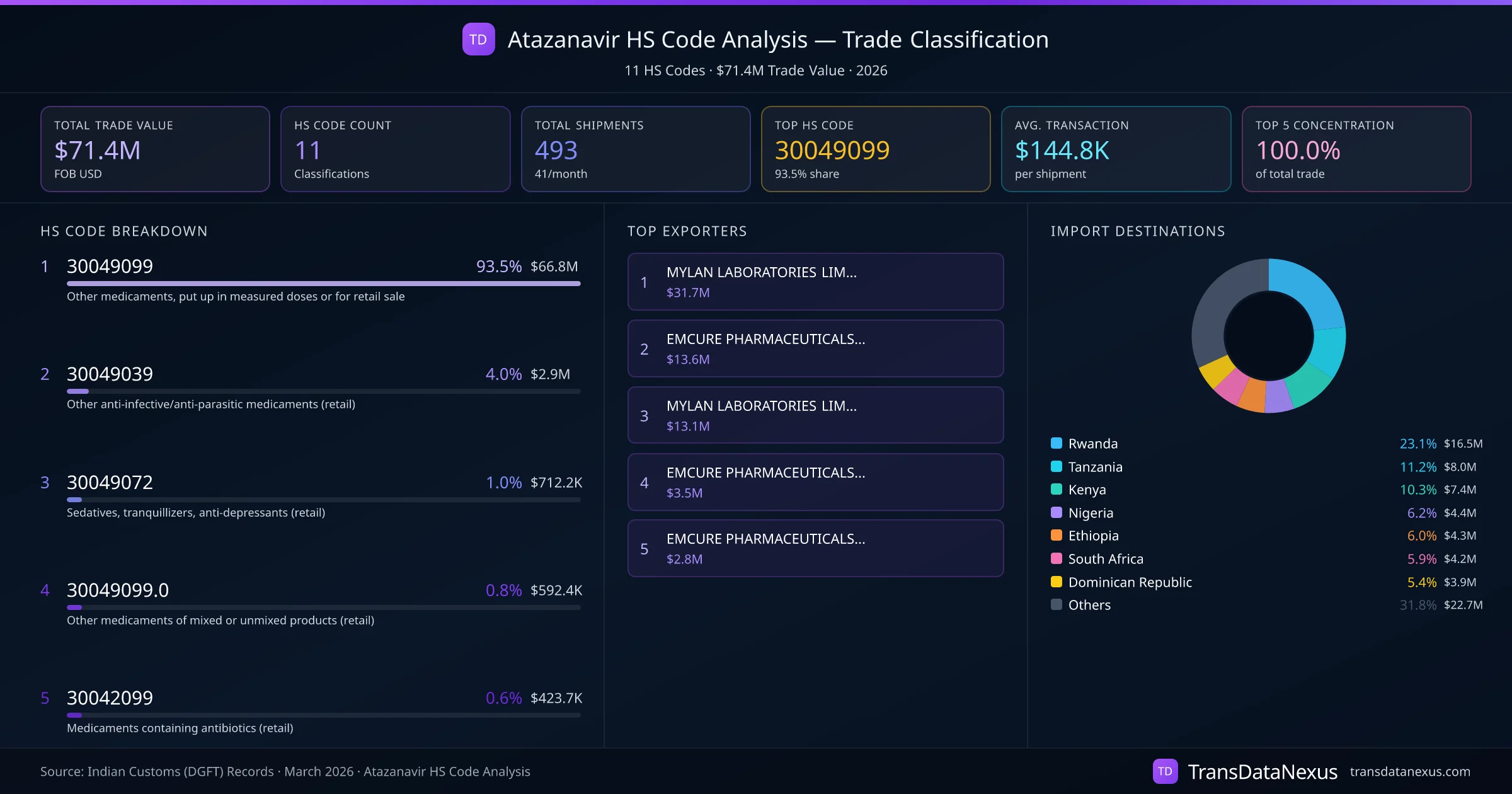
Atazanavir, classified under HS code 30049099, is subject to varying tariff treatments across key importing countries.
Rwanda, Tanzania, Kenya, Ethiopia, and Nigeria: As members of the East African Community (EAC), Rwanda, Tanzania, Kenya, and Ethiopia apply the EAC Common External Tariff (CET). Pharmaceutical products, including Atazanavir, are typically categorized as finished goods under the CET, attracting a standard import duty rate of 35%. However, essential medicines often benefit from exemptions or reduced rates to enhance accessibility. For instance, Rwanda's tariff structure includes provisions for such exemptions. Nigeria, while not part of the EAC, has a similar approach, with essential medicines frequently exempted from import duties to promote public health.
South Africa: As a member of the Southern African Customs Union (SACU), South Africa applies the SACU CET. Pharmaceutical products under HS code 30049099 are generally subject to a 0% import duty, reflecting the country's commitment to facilitating access to essential medicines.
Dominican Republic and Colombia: Both countries are members of the World Trade Organization (WTO) and apply their respective Most Favored Nation (MFN) tariff rates to pharmaceutical imports. The Dominican Republic typically imposes a 0% import duty on essential medicines, aligning with international practices to ensure affordability. Colombia also maintains a 0% import duty on pharmaceutical products under HS code 30049099, supporting public health initiatives.
It's important to note that while these general tariff structures apply, specific exemptions or preferential rates may be in place under bilateral or regional trade agreements with India. Importers and exporters should consult the latest national customs regulations and trade agreements to determine the applicable duties and exemptions for Atazanavir in each market.