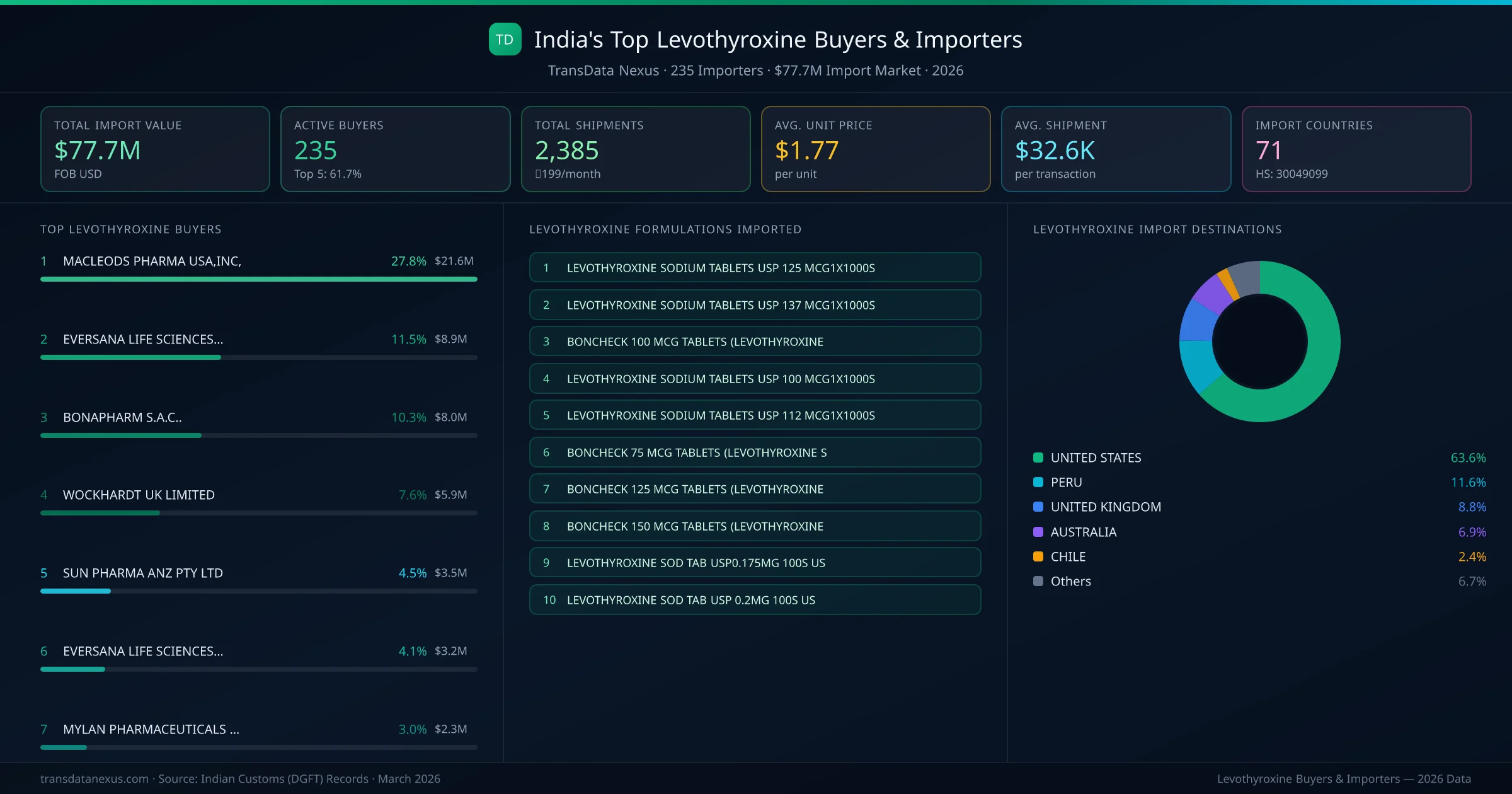
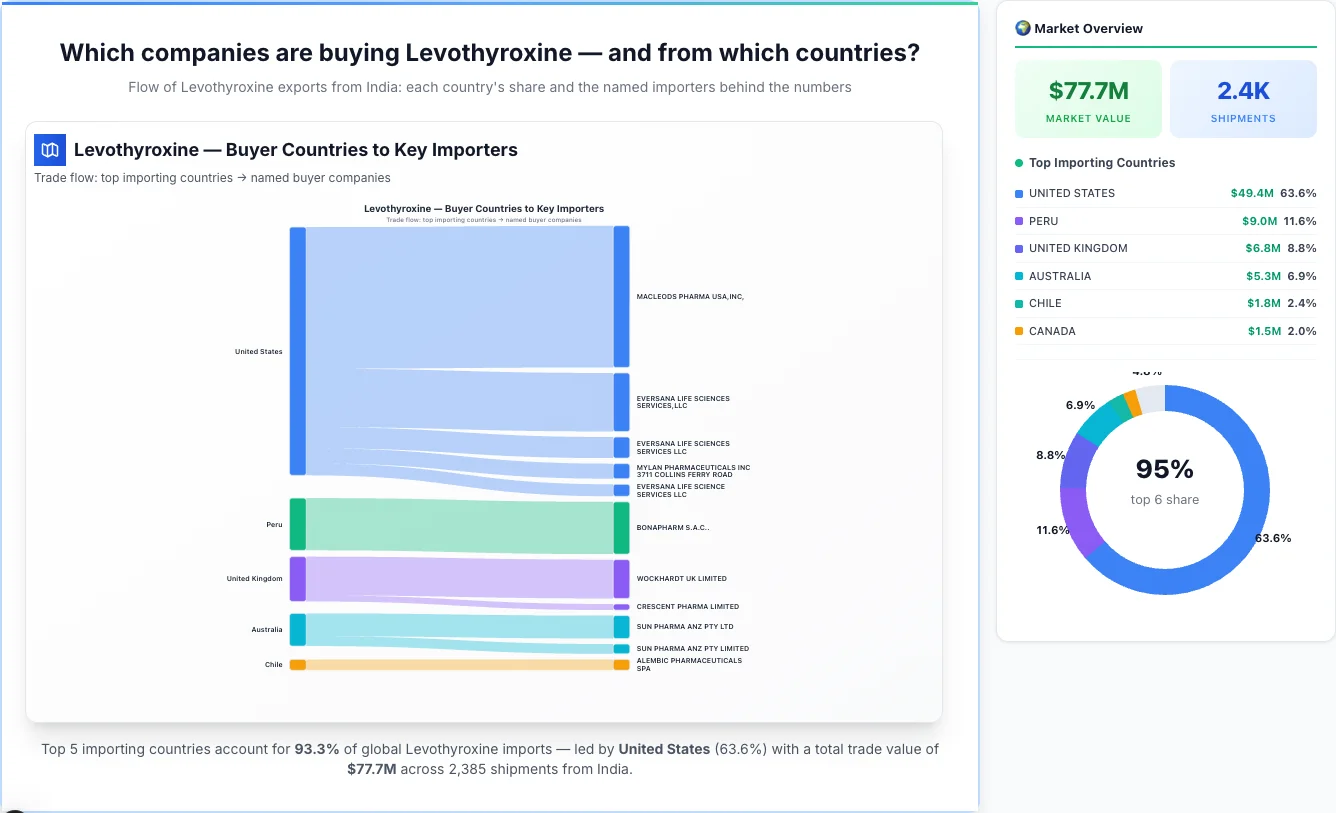
The 235 buyers of Levothyroxine from India can be categorized into several segments:
1. Distributors: Entities that purchase Levothyroxine in bulk to supply to various healthcare providers. For instance, EVERSANA LIFE SCIENCES SERVICES, LLC in the United States, with total imports amounting to $8.93 million, operates as a distributor, facilitating the distribution of pharmaceuticals across multiple channels.
2. Contract Manufacturers: Companies that import Levothyroxine as an active pharmaceutical ingredient (API) for formulation and packaging. WOCKHARDT UK LIMITED in the United Kingdom, importing $5.92 million worth of Levothyroxine, exemplifies this segment, utilizing the API for their pharmaceutical products.
3. Retail Chains: Large pharmacy chains that import Levothyroxine to stock their outlets. MACLEODS PHARMA USA, INC, the top importer with $21.62 million in imports, likely distributes the medication through its extensive retail network.
4. Government Procurement Agencies: Organizations responsible for acquiring medications for public health programs. While specific agencies are not listed among the top buyers, countries like Peru and Chile, with significant import values, may involve government tenders in their procurement processes.
5. Re-exporters: Companies that import Levothyroxine for the purpose of exporting to other markets. ALEMBIC PHARMACEUTICALS SPA in Chile, with imports totaling $1.65 million, may engage in such activities, serving as a hub for regional distribution.
6. Hospital Groups: Large healthcare systems that import directly to meet the needs of their facilities. While not explicitly identified among the top buyers, such entities typically procure medications to ensure a steady supply for patient care.
Each segment exhibits distinct purchasing behaviors. Distributors and contract manufacturers often place large, periodic orders to maintain inventory levels and meet production schedules. Retail chains may order more frequently to replenish stock based on consumer demand. Government agencies typically procure through tender processes, resulting in bulk purchases aligned with budget cycles. Re-exporters' orders are influenced by the demands of their target markets, leading to variable order sizes and frequencies.