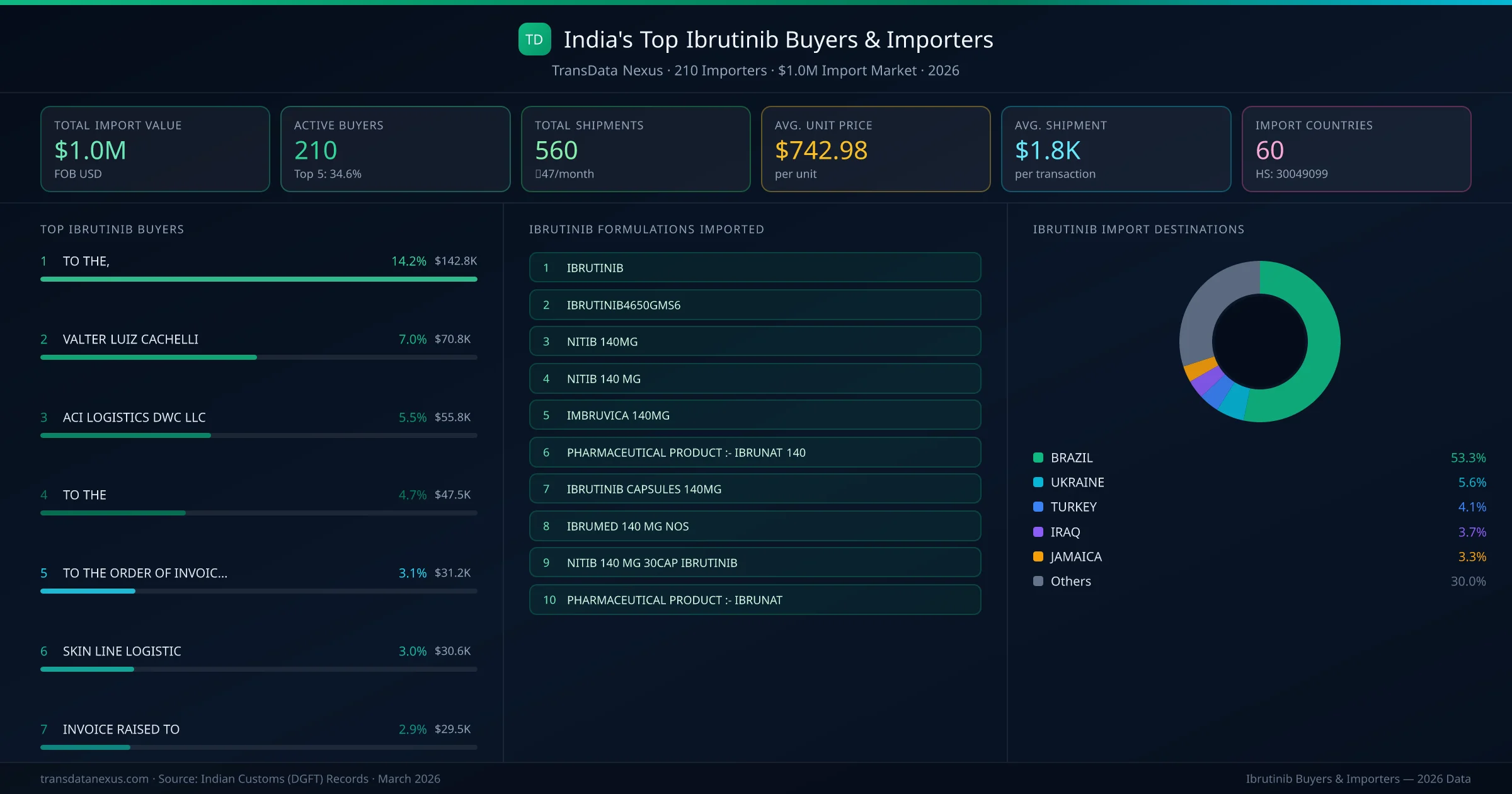
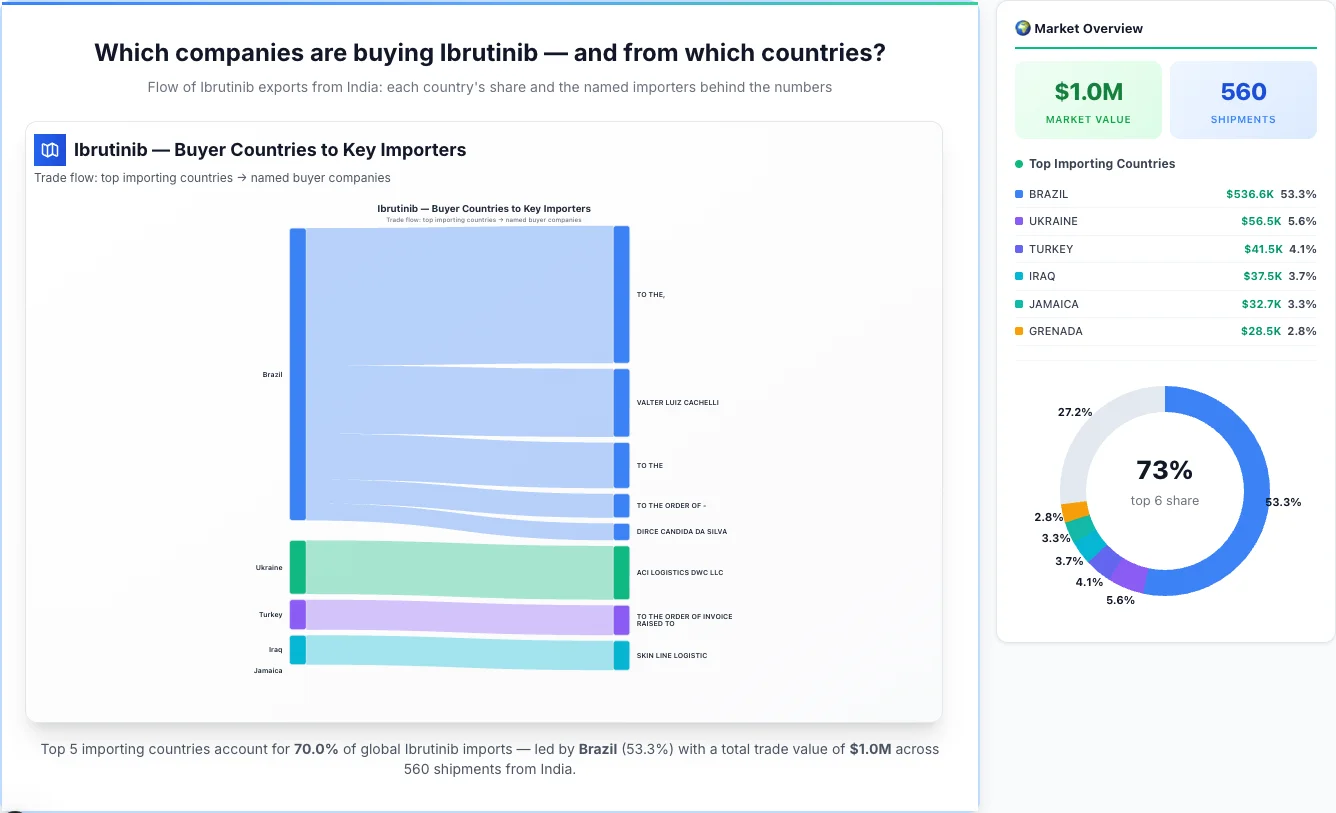
The importation of Ibrutinib from India involves various buyer segments, each with distinct purchasing behaviors and order patterns.
Distributors: These entities purchase Ibrutinib in bulk to supply to healthcare providers and pharmacies. In our data, "ACI LOGISTICS DWC LLC" from Ukraine, with imports totaling $0.06 million, likely falls into this category. Distributors typically place large, periodic orders to maintain inventory levels and meet market demand.
Hospital Groups: These are networks of hospitals that procure medications directly for patient treatment. While specific hospital groups are not explicitly named in the top buyers, entities like "TO THE" from Brazil, with imports totaling $0.14 million, may represent such groups. Hospital groups often have consistent purchasing patterns aligned with patient treatment schedules.
Retail Chains: Pharmacy chains that purchase medications for retail sale. The data does not specify retail chains among the top buyers. Retail chains usually order based on consumer demand and stock turnover rates.
Government Procurement: This includes national health services and international organizations like UNICEF and the Global Fund that procure medications for public health programs. The provided data does not indicate any government procurement entities among the top buyers. Such buyers often engage in tender-based purchasing with large, infrequent orders.
Re-exporters: Companies that import medications to export them to other markets. "SKIN LINE LOGISTIC" from Iraq, with imports totaling $0.03 million, may function as a re-exporter. Re-exporters' purchasing patterns depend on the demands of their target export markets.
Contract Manufacturers: Firms that import active pharmaceutical ingredients or finished products for further processing or packaging. The data does not specify contract manufacturers among the top buyers. These buyers typically order based on production schedules and contractual obligations.