Clinical Research Product
Pharmaceutical Importer · United States · Tuberculosis Medications Focus · $1.4M Total Trade · DGFT Verified
Clinical Research Product is a pharmaceutical importer based in United States with a total trade value of $1.4M across 2 products in 2 therapeutic categories. Based on 27 verified import shipments from Indian Customs (DGFT) records, the company actively imports across multiple product segments. Clinical Research Product sources from 1 verified Indian supplier, with Macleods Pharmaceuticals Limited accounting for 100.0% of imports.
Clinical Research Product — Import Portfolio & Supplier Network
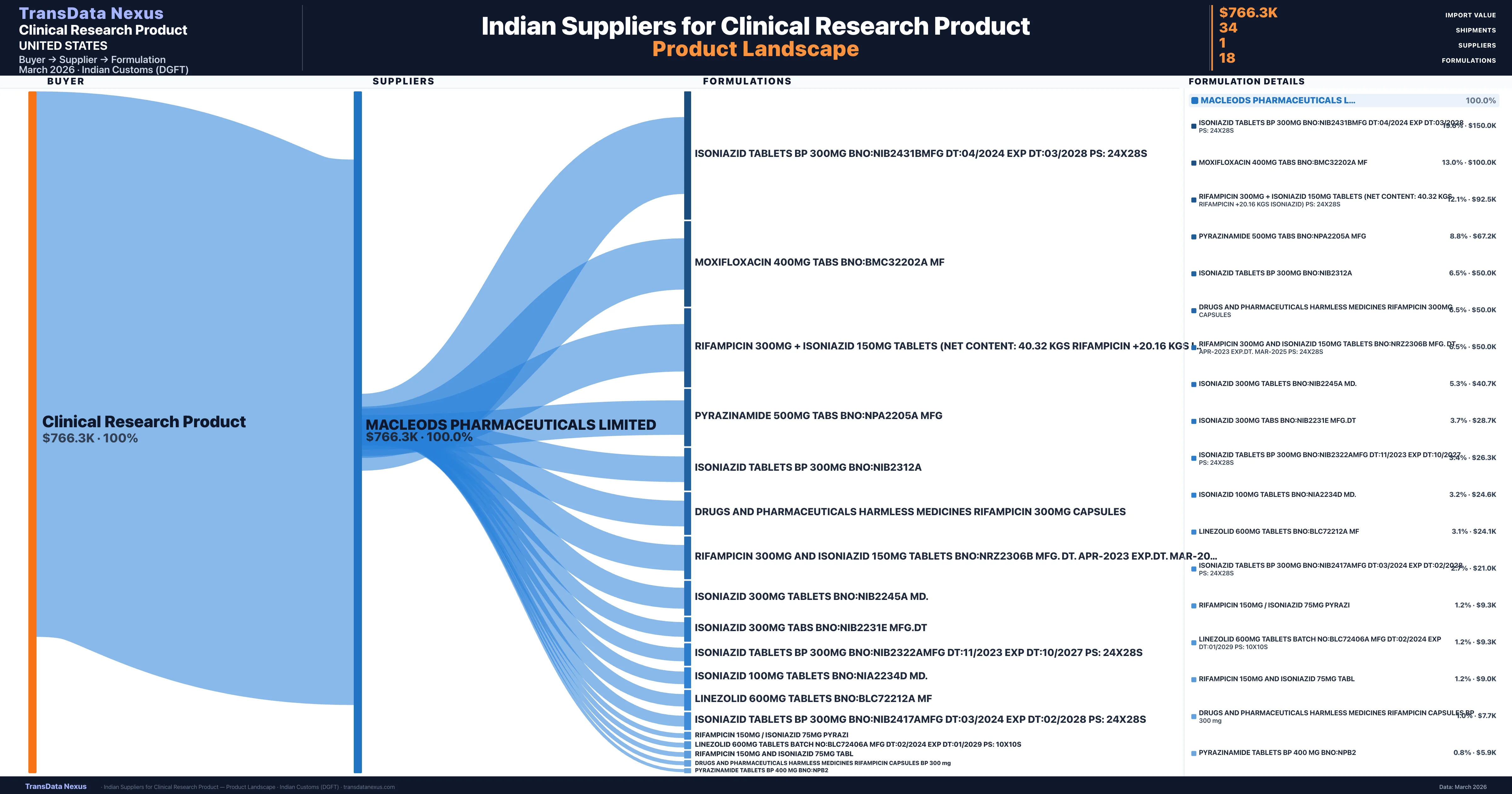
Who Are the Verified Indian Suppliers to Clinical Research Product?
Customs-verified supplier relationships from Indian DGFT records
| Supplier | Value | Shipments | Share |
|---|---|---|---|
| Macleods Pharmaceuticals Limited | $766.3K | 34 | 100.0% |
Clinical Research Product sources from 1 verified Indian supplier across 18 distinct formulations. The sourcing is highly concentrated — Macleods Pharmaceuticals Limited accounts for 100.0% of total imports, indicating a strategic single-source relationship.
What Formulations Does Clinical Research Product Import?
| Formulation | Value | Ships |
|---|---|---|
| Isoniazid tablets BP 300MG bno:nib2431bmfg dt:04/2024 exp dt:03/2028 ps: 24x28s | $150.0K | 3 |
| Moxifloxacin 400MG tabs bno:bmc32202a | $100.0K | 2 |
| Rifampicin 300MG + isoniazid 150MG tablets (net content: 40.32 kgs rifampicin +20.16 kgs isoniazid) ps: 24x28s | $92.5K | 2 |
| Pyrazinamide 500MG tabs bno:npa2205a | $67.2K | 5 |
| Isoniazid tablets BP 300MG | $50.0K | 1 |
| Drugs and pharmaceuticals harmless medicines rifampicin 300MG | $50.0K | 1 |
| Rifampicin 300MG and isoniazid 150MG tablets bno:nrz2306b mfg. dt. apr-2023 exp.dt. mar-2025 ps: 24x28s | $50.0K | 1 |
| Isoniazid 300MG tablets bno:nib2245a md. | $40.7K | 1 |
| Isoniazid 300MG tabs bno:nib2231e | $28.7K | 5 |
| Isoniazid tablets BP 300MG bno:nib2322amfg dt:11/2023 exp dt:10/2027 ps: 24x28s | $26.3K | 3 |
| Isoniazid 100MG tablets bno:nia2234d md. | $24.6K | 1 |
| Linezolid 600MG tablets bno:blc72212a | $24.1K | 1 |
| Isoniazid tablets BP 300MG bno:nib2417amfg dt:03/2024 exp dt:02/2028 ps: 24x28s | $21.0K | 3 |
| Rifampicin 150MG / isoniazid 75MG | $9.3K | 1 |
| Linezolid 600MG tablets batch no:blc72406a mfg dt:02/2024 exp dt:01/2029 ps: 10x10s | $9.3K | 1 |
Clinical Research Product imports 18 distinct pharmaceutical formulations. Showing top 15 by value. For full formulation-level data, contact TransData Nexus.
What Products Does Clinical Research Product Import?
Top Products by Import Value
Clinical Research Product Therapeutic Categories — 2 Specializations
Clinical Research Product imports across 2 therapeutic categories, with Tuberculosis Medications (81.5%), Advanced Antibiotics (18.5%), representing the largest segments. The portfolio is concentrated — top 5 products = 100% of total imports.
Tuberculosis Medications
1 products · 81.5% · $1.1M
Advanced Antibiotics
1 products · 18.5% · $250.0K
Import Portfolio — Top 2 by Import Value
| # | Product | Category | Value | Ships | Share | Rk |
|---|---|---|---|---|---|---|
| 1 | Isoniazid | Tuberculosis Medications | $1.1M | 22 | 0.0% | 8 |
| 2 | Rifampicin | Advanced Antibiotics | $250.0K | 5 | 0.0% | 8 |
Clinical Research Product imports 2 pharmaceutical products across 2 categories into United States totaling $1.4M.
Key Metrics
Top Categories
Indian Suppliers
Related Trade Data
Need Detailed Data?
Shipment-level records, supplier connections & pricing for Clinical Research Product.
Request DemoClinical Research Product — Corporate Profile & Information
Company type, headquarters, distribution network, and industry role
1Company Overview
Clinical Research Product is a United States-based pharmaceutical importer specializing in the acquisition of finished pharmaceutical formulations from international suppliers, particularly from India. The company operates as a buyer, sourcing medications to meet the therapeutic needs of the U.S. market. While specific details about its headquarters and parent company are not publicly disclosed, its role in the U.S. pharmaceutical distribution network is significant, focusing on importing and distributing essential medications.
The company's import activities are primarily centered around tuberculosis medications and advanced antibiotics, reflecting a strategic focus on critical therapeutic areas. By importing finished formulations, Clinical Research Product ensures that the medications are ready for immediate distribution, thereby streamlining the supply chain and facilitating timely access to these essential drugs within the United States.
2Distribution Network
Clinical Research Product's distribution network encompasses various warehouse locations across the United States, strategically positioned to optimize logistics and ensure efficient delivery of imported pharmaceutical products. The company's logistics capabilities are designed to handle the complexities of pharmaceutical distribution, including temperature-sensitive shipments and compliance with regulatory standards. While specific details about the geographic coverage beyond the United States are not publicly available, the company's operations are primarily focused on serving the U.S. market.
3Industry Role
In the United States pharmaceutical supply chain, Clinical Research Product functions as a specialized importer, focusing on sourcing and distributing finished pharmaceutical formulations. This role is crucial in ensuring the availability of essential medications, particularly in therapeutic areas such as tuberculosis and advanced antibiotics. By importing ready-to-use formulations, the company plays a pivotal role in bridging the gap between international manufacturers and the U.S. healthcare system, facilitating timely access to critical drugs.
Supplier Relationship Intelligence — Clinical Research Product
Sourcing concentration, supply chain resilience, and strategic implications
1Sourcing Concentration Analysis
Clinical Research Product's sourcing strategy exhibits a high degree of concentration, with a significant portion of its imports originating from a single supplier: MACLEODS PHARMACEUTICALS LIMITED. This single-source dependency could pose risks related to supply chain disruptions, such as production delays or regulatory issues affecting the supplier. However, the consistent volume of shipments and the substantial total import value suggest a stable and reliable relationship between Clinical Research Product and MACLEODS PHARMACEUTICALS LIMITED. The company's focus on a limited number of products and suppliers may also indicate a strategic choice to maintain quality control and streamline operations.
2Supply Chain Resilience
The resilience of Clinical Research Product's supply chain is closely tied to the stability and reliability of its primary supplier, MACLEODS PHARMACEUTICALS LIMITED. The company's reliance on a single supplier for a significant portion of its imports suggests a need for contingency planning to mitigate potential risks. While the focus on finished pharmaceutical formulations may offer some flexibility in sourcing, the limited number of suppliers and formulations could constrain the company's ability to adapt to supply chain disruptions. Ensuring that MACLEODS PHARMACEUTICALS LIMITED adheres to international quality standards and maintains consistent production capabilities is essential for sustaining the supply chain's resilience.
3Strategic Implications
Clinical Research Product's concentrated sourcing strategy positions it to leverage strong relationships with its supplier, potentially securing favorable terms and ensuring consistent product quality. However, this approach also exposes the company to risks associated with supplier dependency, such as production delays or regulatory challenges affecting the supplier. For Indian exporters, understanding Clinical Research Product's focus on finished pharmaceutical formulations and its emphasis on quality and reliability can inform strategies to become alternative suppliers, thereby diversifying the company's sourcing base and enhancing supply chain resilience.
Importing Pharmaceuticals into United States — Regulatory Framework
Regulatory authority, GMP requirements, import licensing for United States
1Regulatory Authority & Framework
In the United States, the Food and Drug Administration (FDA) serves as the primary regulatory authority overseeing the importation and distribution of pharmaceutical products. The FDA enforces regulations outlined in the Federal Food, Drug, and Cosmetic Act, which governs the approval, labeling, and marketing of drugs within the U.S. For imported drugs, the FDA requires compliance with specific standards, including Good Manufacturing Practices (GMP), to ensure product safety and efficacy. Additionally, the FDA mandates that all drug products offered for importation into the United States meet labeling requirements and may review drug labeling at the time the product is offered for import to verify compliance with the regulations.
2Import Licensing & GMP
Import licensing requirements for pharmaceutical products entering the United States are stringent. Importers must ensure that their products comply with FDA regulations, including those related to Good Manufacturing Practices (GMP). The FDA does not recognize regulatory approvals from other countries; therefore, foreign manufacturers must comply with FDA's regulatory requirements before, during, and after importing into the United States. Additionally, importers are required to file an entry notice and an entry bond with U.S. Customs and Border Protection (CBP) to facilitate the import process.
3Quality & Labeling
Imported pharmaceutical products must adhere to specific quality and labeling standards set by the FDA. This includes compliance with labeling requirements, which may be reviewed by the FDA at the time the product is offered for import to verify compliance with the regulations. Additionally, the FDA requires that all drug products offered for importation into the United States meet labeling requirements and may review drug labeling at the time the product is offered for import to verify compliance with the regulations.
4Recent Regulatory Changes
Between 2024 and 2026, the FDA has implemented several policy changes affecting the importation of pharmaceutical products into the United States. These changes include updates to import procedures, enhanced scrutiny of foreign manufacturing facilities, and stricter enforcement of labeling and packaging requirements. Importers must stay informed about these regulatory changes to ensure compliance and avoid potential disruptions in their supply chains.
Clinical Research Product — Procurement Pattern Analysis
Product strategy, sourcing profile, and market positioning
1Product Strategy
Clinical Research Product's focus on importing tuberculosis medications and advanced antibiotics aligns with the ongoing demand for these critical therapeutic areas in the United States. Tuberculosis remains a significant public health concern, necessitating a steady supply of effective treatments. Advanced antibiotics are essential in combating antibiotic-resistant infections, a growing challenge in healthcare. By concentrating on these product categories, Clinical Research Product addresses pressing medical needs and positions itself as a key player in supplying vital medications to the U.S. market.
2Sourcing Profile
Clinical Research Product's sourcing strategy is centered on acquiring finished pharmaceutical formulations from international suppliers, particularly from India. This approach allows the company to import ready-to-use medications, streamlining the supply chain and ensuring timely availability of essential drugs. The focus on finished formulations, as opposed to raw Active Pharmaceutical Ingredients (APIs), indicates a preference for products that meet specific quality standards and regulatory requirements, facilitating smoother entry into the U.S. market.
3Market Positioning
Based on its product mix, Clinical Research Product serves the U.S. pharmaceutical market by importing and distributing essential medications, particularly in the therapeutic areas of tuberculosis and advanced antibiotics. The company's role as an importer and distributor positions it to supply these critical drugs to various segments of the healthcare system, including hospitals, clinics, and pharmacies. By focusing on finished pharmaceutical formulations, Clinical Research Product ensures that these medications are readily available for immediate use, supporting the healthcare system's ability to address urgent medical needs.
Seller's Guide — How to Become a Supplier to Clinical Research Product
Opportunity assessment, qualifications, and practical approach strategy
1Opportunity Assessment
There is a realistic opportunity for new Indian suppliers to engage with Clinical Research Product, especially those capable of providing high-quality finished pharmaceutical formulations in the therapeutic areas of tuberculosis and advanced antibiotics. By meeting the FDA's regulatory requirements and demonstrating consistent product quality, Indian exporters can position themselves as viable alternatives to existing suppliers, potentially expanding Clinical Research Product's sourcing base and enhancing supply chain resilience.
2Requirements & Qualifications
Indian exporters seeking to supply Clinical Research Product and the U.S. market must ensure that their products comply with FDA regulations, including adherence to Good Manufacturing Practices (GMP). Additionally, products must meet specific labeling requirements as set forth by the FDA. Establishments involved in the production and distribution of pharmaceutical products intended for commercial distribution in the United States are required to register and list annually with the FDA.
3How to Approach
Indian exporters interested in supplying Clinical Research Product should begin by ensuring compliance with FDA regulations, including GMP and labeling requirements. Establishing direct communication with Clinical Research Product to understand their specific sourcing needs and quality standards is essential. Participating in relevant industry trade shows and forums can also provide opportunities to build relationships and demonstrate product capabilities. Given the regulatory complexities, it is advisable to consult with regulatory experts to navigate the FDA's import procedures effectively.
Frequently Asked Questions — Clinical Research Product
What products does Clinical Research Product import from India?
Clinical Research Product imports 2 pharmaceutical products across 2 categories. Top imports: Isoniazid ($1.1M), Rifampicin ($250.0K).
Who supplies pharmaceuticals to Clinical Research Product from India?
Clinical Research Product sources from 1 verified Indian suppliers. The primary supplier is Macleods Pharmaceuticals Limited (100.0% of imports, $766.3K).
What is Clinical Research Product's total pharmaceutical import value?
Clinical Research Product's total pharmaceutical import value from India is $1.4M, based on 27 verified shipments in Indian Customs (DGFT) data.
What therapeutic categories does Clinical Research Product focus on?
Clinical Research Product imports across 2 categories. The largest: Tuberculosis Medications (81.5%), Advanced Antibiotics (18.5%).
Get Full Clinical Research Product Import Intelligence
Access shipment-level details, supplier connections, pricing data, and competitive analysis. TransData Nexus provides verified Indian Customs (DGFT) data trusted by pharmaceutical trade professionals worldwide.
Official References & Regulatory Resources
Verify import regulations and drug registration requirements with the agencies above.
Research Methodology & Data Transparency
Suresh Sormare
Verified AuthorPharmaceutical Export-Import Analyst & Trade Intelligence Expert
Suresh Sormare is a pharmaceutical export-import analyst with deep expertise in Indian Customs (DGFT) data, HS code classification, and global pharmaceutical supply chains. His analysis covers 10M+ shipment records across 150+ countries and is used by manufacturers, procurement agencies, and trade consultants worldwide. Suresh specializes in identifying verified suppliers and buyers from customs records, mapping bilateral pharmaceutical trade corridors, analyzing tariff structures and regulatory frameworks across 170+ destination markets, and benchmarking competitive positioning for finished pharmaceutical formulations. His methodology combines granular customs transaction data with regulatory intelligence from FDA, EMA, WHO, CDSCO, and 40+ national drug authorities to deliver actionable trade insights for the pharmaceutical formulations sector.
linkedin.com/in/sureshsormarePrimary Data Source
All trade data is sourced from Indian Customs (DGFT) official shipping bill records — the authoritative government database for India's pharmaceutical trade. Each verified record contains exporter name, consignee (buyer) name, detailed product description, quantity, declared FOB value (USD), port of loading, destination country, and shipment date.
Analysis Methodology
- 1.Buyer Matching: Clinical Research Product identified across shipments using consignee name normalization.
- 2.Statistical Normalization: Shipment values are statistically normalized to ensure accurate market share representation.
- 3.Market Share: Calculated per product as Clinical Research Product's capped value divided by total Indian exports for that product.
- 4.Shipment Count: Based on 27 individual customs records matching Clinical Research Product.
- 5.Supplier Verification: Clinical Research Product sources from 1 verified Indian suppliers across 18 formulations, confirmed from customs records.
Government-Sourced Data
Official DGFT customs records
Transparent Methodology
Calculations fully disclosed above
2 Products Tracked
2 therapeutic categories
Expert-Reviewed
By pharmaceutical trade specialists
Data Source & Methodology
Trade data sourced from Indian Customs (DGFT) export shipment records. Values represent FOB export value in USD. For current shipment-level data, contact TransData Nexus.