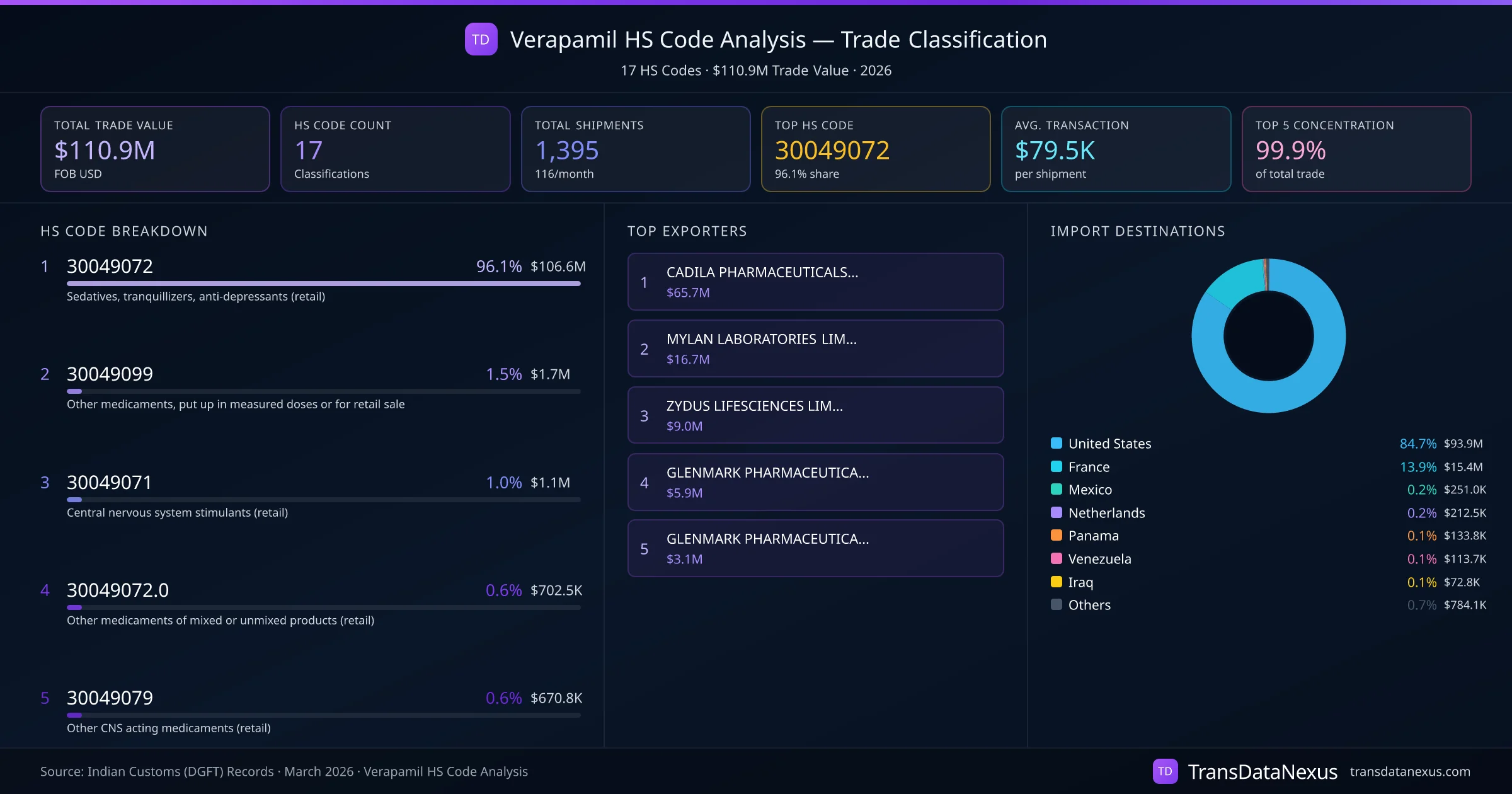
Verapamil, classified under HS code 30049072, is subject to varying Most Favored Nation (MFN) tariff rates across key importing countries. In the United States, pharmaceuticals under HS 3004 generally benefit from a zero MFN tariff rate, facilitating cost-effective imports. Similarly, the European Union, encompassing France and the Netherlands, applies a zero MFN tariff rate to products under HS 3004, promoting seamless trade within the bloc. Mexico, as a member of the World Trade Organization (WTO), also maintains a zero MFN tariff rate for pharmaceuticals under this classification.
Panama, Venezuela, Iraq, and South Africa, as WTO members, typically adhere to the organization's guidelines, often applying low or zero MFN tariff rates to essential medicines, including those under HS 3004. However, specific rates can vary and are subject to change; therefore, consulting the latest national customs authorities' publications is advisable for precise information.
Regarding preferential rates under Free Trade Agreements (FTAs) with India, the United States and the European Union do not have FTAs with India that affect pharmaceutical tariffs. Mexico, as part of the India-MERCOSUR Preferential Trade Agreement, may offer reduced tariffs on certain products; however, pharmaceuticals like Verapamil are often exempt from such preferences. Panama, Venezuela, Iraq, and South Africa do not have specific FTAs with India impacting pharmaceutical imports.
Exemptions for essential medicines are common, with many countries waiving tariffs to ensure public access to critical healthcare products. For instance, the United States and the European Union have policies in place to exempt essential medicines from import duties. Similarly, other nations may implement exemptions or reduced tariffs for essential medicines, aligning with global health initiatives.