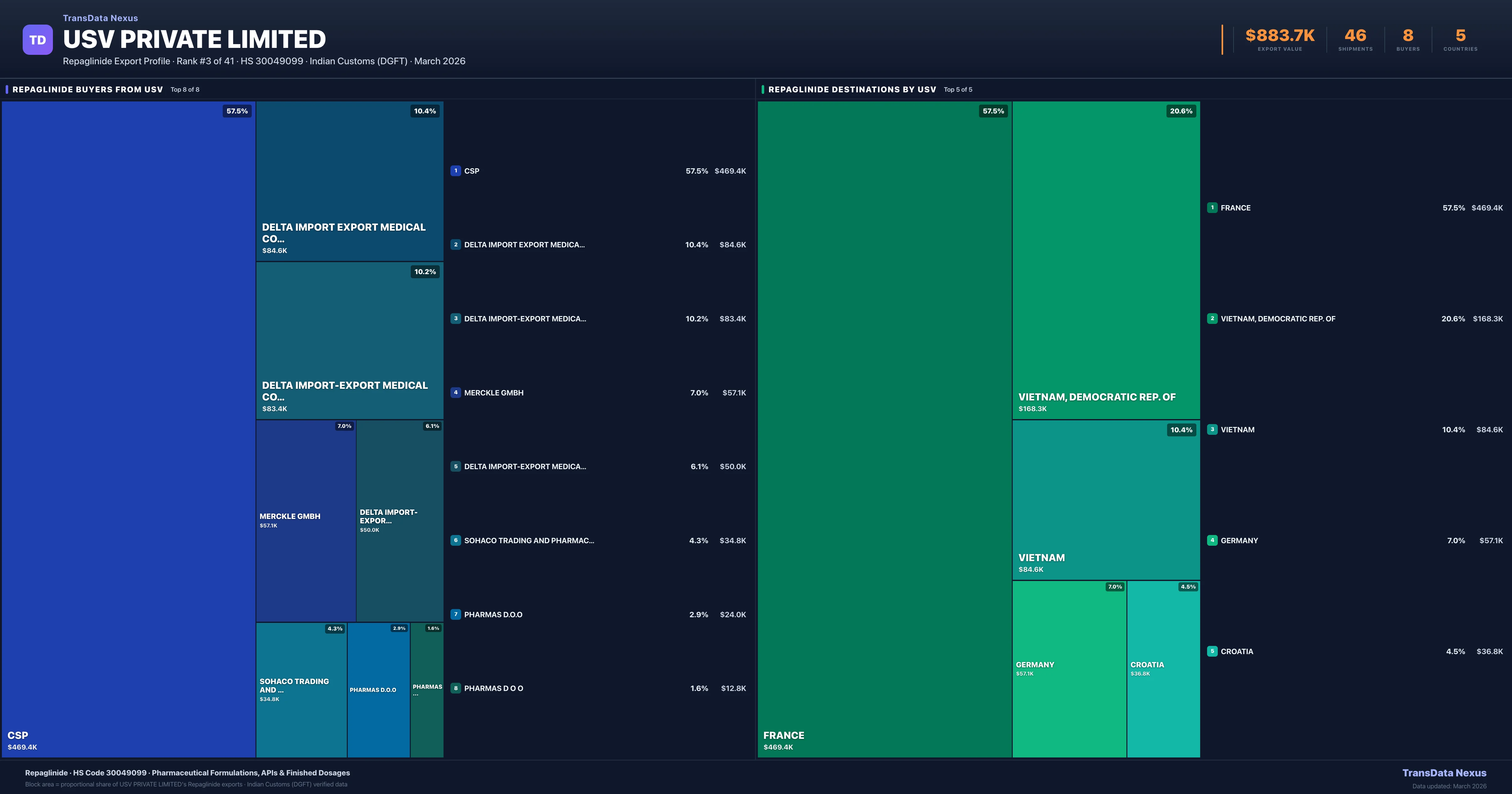
Geopolitical & Trade Policy Impact on USV Private Limited's Repaglinide Exports
USV's export operations are intricately linked to global trade routes, making them susceptible to geopolitical tensions. The recent Israel-Iran conflict has disrupted Red Sea shipping lanes, leading to increased freight costs and extended delivery timelines. Such disruptions pose challenges for Indian pharmaceutical exporters like USV, necessitating agile logistics strategies to mitigate potential supply chain bottlenecks. (pharmaceuticalcommerce.com)
Conversely, the evolving trade dynamics between the US and China have opened avenues for Indian pharmaceutical companies. As the US seeks to diversify its supply chains, Indian exporters, including USV, have the opportunity to capture a larger share of the American market. However, the imposition of 100% tariffs on branded or patented pharmaceutical products by the US in October 2025 presents a significant challenge. While generic drugs may remain largely unaffected, companies like USV must navigate these policy shifts to maintain their export competitiveness. (itisbl.com)
The India–European Union Free Trade Agreement, concluded in January 2026, offers a favorable landscape for Indian pharmaceutical exporters. The elimination of tariffs on pharmaceuticals enhances market access for companies like USV, potentially boosting exports to the EU. However, compliance with the EU's stringent falsified medicines directive remains imperative, necessitating robust quality assurance mechanisms to meet regulatory standards. (en.wikipedia.org)
USV Private Limited — Regulatory Compliance & Quality Standards
The global pharmaceutical industry is witnessing heightened regulatory scrutiny, with agencies like the FDA, WHO, and EU enforcing stringent Good Manufacturing Practices (GMP). For Indian exporters such as USV, adherence to these evolving quality standards is non-negotiable. The increasing emphasis on compliance underscores the necessity for continuous investment in quality control systems and transparent governance structures. Companies that proactively align with these standards are better positioned to sustain and expand their export operations in regulated markets. (lupinnews.com)