India to Turkey Pharmaceutical Export
Bilateral Trade Intelligence · $161.4M Total Trade · 287 Exporters · 485 Buyers · DGFT Verified · Updated March 2026
India exported $161.4M worth of pharmaceutical formulations to Turkey across 15,362 verified shipments, sourced from 287 Indian exporters supplying 485 Turkey buyers. The top exporters are MEDCELL PHARMA ($28.4M) and SERUM INSTITUTE OF INDIA PRIVATE LIMITED ($12.7M). The leading products are Ceftriaxone ($10.1M) and Paracetamol ($4.3M). Average shipment value: $10.5K.
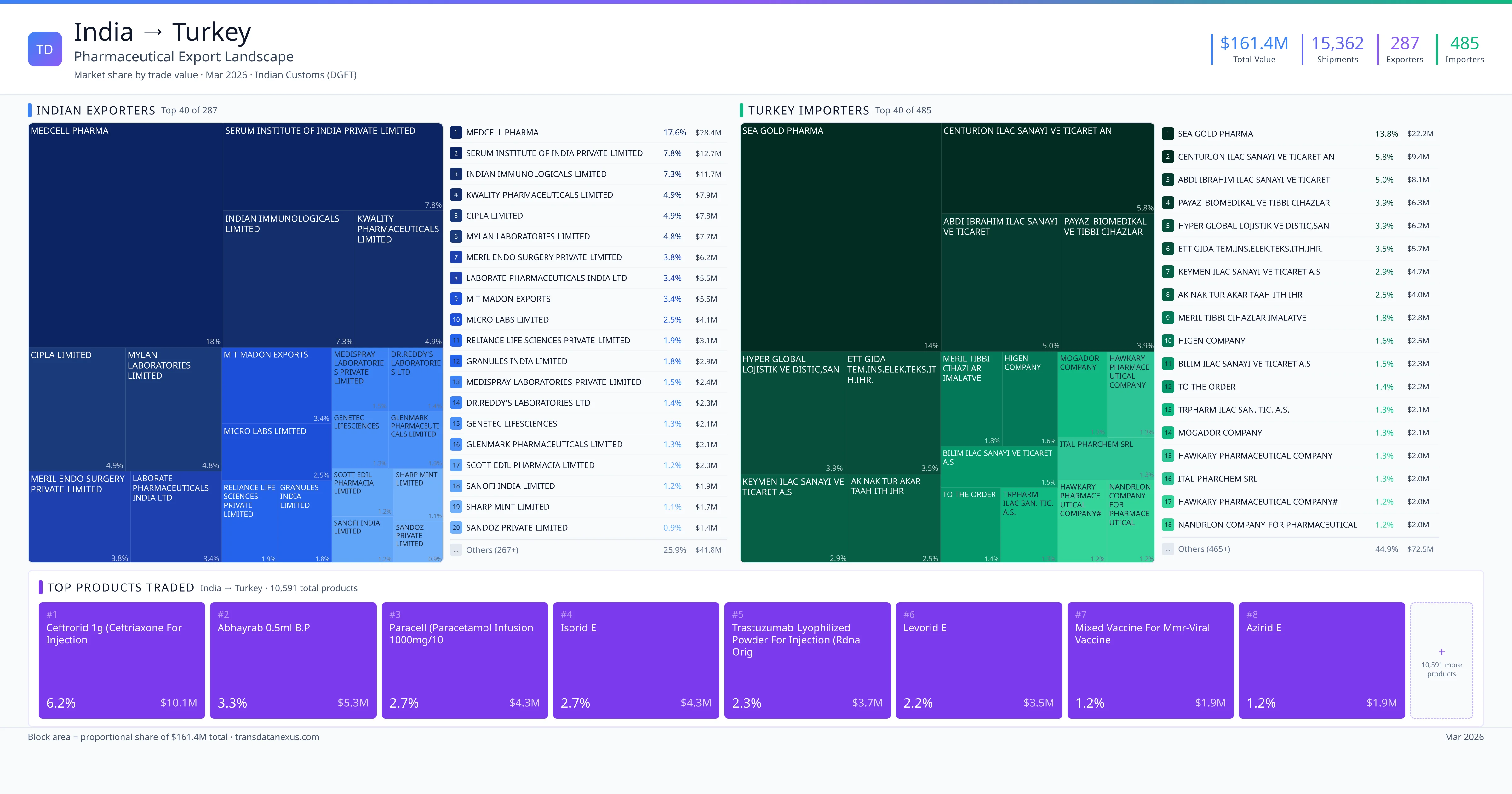
Top Pharmaceutical Formulations — India to Turkey
| # | Formulation | Value | Share |
|---|---|---|---|
| 1 | Ceftrorid 1g (ceftriaxone for Injection | $10.1M | 6.2% |
| 2 | Abhayrab 0.5ml B.p | $5.3M | 3.3% |
| 3 | Paracell (paracetamol Infusion 1000mg/10 | $4.3M | 2.7% |
| 4 | Isorid E | $4.3M | 2.7% |
| 5 | Trastuzumab Lyophilized Powder for Injection (rdna Origin) 150 Mg[trastuzumab 1… | $3.7M | 2.3% |
| 6 | Levorid E | $3.5M | 2.2% |
| 7 | Mixed Vaccine for Mmr-viral Vaccine | $1.9M | 1.2% |
| 8 | Azirid E | $1.9M | 1.2% |
| 9 | Seroflo 250 Hfa Inhaler (salmeterol Xinafoate 25mcg+fluticasone Propionate 250m… | $1.5M | 1.0% |
| 10 | Met Tara IV Metronidazole 500mg /100ml B | $1.5M | 0.9% |
| 11 | Diphtheria and Tetanus Vaccine Adsorbed for Adults and Adolescents)1 Dose Vac | $1.4M | 0.9% |
| 12 | Metrocell (metronidazole Infusion BP 500 | $1.4M | 0.8% |
| 13 | (mixed Vaccines for Diptheria and Tetanu | $1.3M | 0.8% |
| 14 | Iburid (ibuprofen Oral Suspension BP 100 | $1.3M | 0.8% |
| 15 | Vomirid (ondansetron Injection BP 8mg/4m | $1.1M | 0.7% |
India exports 20+ pharmaceutical formulations to Turkey with a combined trade value of $161.4M. Key products include Ceftriaxone ($10.1M), Paracetamol ($4.3M), Trastuzumab ($3.7M), Levofloxacin ($3.5M), Vaccine ($1.9M). These are finished dosage forms — tablets, capsules, injectables, and combination drugs — shipped from Indian manufacturing facilities with FDA, WHO-GMP, and EU GMP certifications. Data from 15,362 verified Indian Customs (DGFT) shipment records.
Top Pharmaceutical Products — India to Turkey Trade Routes
These are the top pharmaceutical products exported from India to Turkey, each with a dedicated trade route analysis page. Click any product to see detailed export data including Indian suppliers, Turkey buyers, regulatory requirements, and logistics for that specific product corridor. Products include Ceftriaxone ($10.1M), Paracetamol ($4.3M), Trastuzumab ($3.7M), Levofloxacin ($3.5M), Vaccine ($1.9M) — all finished pharmaceutical formulations verified from Indian Customs (DGFT) records.
Top Indian Exporters to Turkey
287 Indian pharmaceutical companies export finished formulations to Turkey. Leading exporters include Medcell Pharma, Serum Institute Of India Private Limited, Indian Immunologicals Limited, Kwality Pharmaceuticals Limited. The top exporter accounts for 17.6% of total India–Turkey pharma exports. Source: Indian Customs (DGFT).
Top Turkey Buyers from India
485 companies in Turkey import pharmaceutical formulations from India. Top buyers include Sea Gold Pharma, Centurion Ilac Sanayi Ve Ticaret An, Abdi Ibrahim Ilac Sanayi Ve Ticaret, Payaz Biomedikal Ve Tibbi Cihazlar. The largest buyer accounts for 13.8% of India–Turkey pharma imports. Source: Indian Customs (DGFT).
Port Analysis — India to Turkey Pharmaceutical Shipments
Indian Export Ports
Turkey Import Ports
Trade Statistics
Other Destinations
Product Routes
India–Turkey Pharmaceutical Trade Corridor Analysis
Historical evolution, India's market position, and recent developments
1Trade Corridor Evolution
The pharmaceutical trade between India and Turkey has experienced significant growth over the past decade. In 2024, India's pharmaceutical exports to Turkey reached $98.39 million, marking a substantial increase from previous years. This upward trajectory underscores the strengthening economic ties and the growing demand for Indian pharmaceutical products in the Turkish market.
Key milestones in this bilateral trade include the establishment of direct shipping routes and the initiation of joint ventures between Indian pharmaceutical companies and Turkish distributors. These collaborations have facilitated smoother logistics and enhanced market penetration. The consistent growth in export value reflects the successful adaptation of Indian pharmaceutical firms to the regulatory and market dynamics of Turkey.
2India's Market Position
India holds a significant share in Turkey's pharmaceutical import market, positioning itself as a key supplier alongside other origins. The strategic importance of this relationship is evident in the diversification of India's export portfolio, which includes a range of generic and branded formulations tailored to meet Turkey's healthcare needs. This market presence is bolstered by India's competitive pricing and the high quality of its pharmaceutical products.
3Recent Developments
Between 2024 and 2026, several developments have influenced the India-Turkey pharmaceutical trade. Notably, in December 2023, the Turkish Medicines and Medical Devices Agency published guidelines on the conditions for pharmaceutical exports by companies other than pharmaceutical warehouses. These guidelines aim to ensure that pharmaceutical products are exported in compliance with national and international standards, emphasizing the importance of Good Distribution Practices.
Additionally, in June 2022, Turkey announced the Regulation on Pharmaceutical Establishments and Products in Pharmaceutical Establishments, harmonizing the supply chain rules with European Union regulations. This regulation mandates that pharmaceutical products and active substances follow the legal supply chain, impacting the import and export processes.
EXPORT_REGULATORY
Turkey Regulatory Landscape for Indian Pharmaceutical Exports
Registration process, GMP requirements, import documentation
1Registration Process
Indian pharmaceutical companies seeking to register products in Turkey must adhere to the guidelines set by the Turkish Medicines and Medical Devices Agency. The registration process involves submitting a comprehensive dossier that includes toxicological and pharmacological tests, clinical trial data, and a description of control methods used by the manufacturer. The dossier must be prepared in the Common Technical Document (CTD) format, which is internationally recognized. The timeline for registration can vary, but it typically spans several months, depending on the complexity of the product and the completeness of the submitted documentation.
2GMP & Facility Requirements
Turkey requires that manufacturing sites comply with Good Manufacturing Practices (GMP) standards to ensure the quality and safety of pharmaceutical products. The inspection process involves a thorough evaluation of the manufacturing facilities, including assessments of production processes, quality control measures, and documentation practices. Mutual recognition agreements between Turkey and other countries may facilitate the acceptance of GMP certifications, but Indian manufacturers should verify the specific requirements and agreements in place to streamline the approval process.
3Import Documentation
To import pharmaceutical products into Turkey, companies must obtain an import license from the Ministry of Health. This license is granted based on a market authorization, which is typically held by the Turkish subsidiary of the pharmaceutical manufacturer. The import documentation includes a commercial invoice, bill of lading or airway bill, packing list, certificate of origin, and a certificate of analysis. Additionally, a certificate of control from the Ministry of Health is required, which involves submitting documents such as a pro forma invoice, certificate of analysis, and an approved health certificate issued by the competent authority in the country of origin.
EXPORT_TRENDS
Product Categories & Therapeutic Trends — India to Turkey
Dominant categories, emerging opportunities, and demand drivers
1Dominant Categories
The dominant categories in India's pharmaceutical exports to Turkey include antibiotics, vaccines, and oncology drugs. These therapeutic areas align with Turkey's healthcare needs, addressing prevalent infectious diseases, vaccination programs, and cancer treatment requirements. The demand for these products is driven by Turkey's efforts to enhance its healthcare infrastructure and provide comprehensive medical care to its population.
2Emerging Opportunities
Emerging opportunities for Indian exporters in Turkey include the growing demand for biosimilars and the potential for collaboration in new therapeutic areas such as immunology and gene therapy. The Turkish government's focus on expanding healthcare access and improving treatment outcomes presents avenues for Indian pharmaceutical companies to introduce innovative products and technologies. Additionally, the expiration of patents for certain branded drugs opens the market for generic alternatives, providing a competitive edge for Indian manufacturers.
3Demand Drivers
Turkey's increasing disease burden, aging population, and rising healthcare spending are primary drivers of import demand from India. The country's efforts to modernize its healthcare system and provide quality medical services to its citizens contribute to the growing need for pharmaceutical imports. Additionally, Turkey's strategic location as a bridge between Europe and Asia enhances its role as a significant market for pharmaceutical products.
EXPORT_POLICY
Trade Policy & Tariff Intelligence — India and Turkey
Tariff structure, trade agreements, IP and patent landscape
1Tariff & Duty Structure
Turkey's Most Favored Nation (MFN) tariff rates for pharmaceutical formulations are generally low, reflecting the country's commitment to ensuring affordable access to essential medicines. Preferential rates and duty exemptions may apply under specific trade agreements or for products that meet certain criteria, such as those addressing public health priorities. Indian pharmaceutical exporters should consult the latest Turkish customs regulations and trade agreements to determine applicable tariffs and potential exemptions.
2Trade Agreements
Turkey and India have engaged in discussions to enhance bilateral trade relations, including the pharmaceutical sector. While there is no comprehensive Free Trade Agreement (FTA) in place, both countries have expressed interest in reducing trade barriers and facilitating smoother market access. Ongoing negotiations aim to address issues such as intellectual property rights, regulatory harmonization, and customs procedures to promote mutual trade interests.
3IP & Patent Landscape
Turkey's intellectual property laws, including those related to patents and data exclusivity, impact the entry of Indian generic drugs into the Turkish market. The country adheres to international agreements such as the Trade-Related Aspects of Intellectual Property Rights (TRIPS), which influences patent protection and enforcement. Indian exporters must navigate these regulations to ensure compliance and to identify opportunities for market entry, especially in the generic segment.
EXPORT_LOGISTICS
Supply Chain & Logistics — India to Turkey Pharma Shipments
Shipping routes, port infrastructure, cold chain compliance
1Shipping Routes & Transit
Major sea and air routes facilitate the transportation of pharmaceutical products from Indian ports to Turkey. Sea routes typically involve transit through the Suez Canal, with an estimated transit time of 15-20 days, depending on the specific ports of departure and arrival. Air routes offer faster delivery, with transit times ranging from 5 to 7 days. However, geopolitical events, such as tensions in the Red Sea region, can disrupt these routes, potentially affecting delivery schedules. Exporters should monitor geopolitical developments and plan logistics accordingly to mitigate potential disruptions.
2Port Infrastructure
In India, key export ports include Sahar Air Cargo (INBOM4) and Sahar Air, which handle a significant portion of pharmaceutical exports. In Turkey, major import ports are Istanbul and Mersin, which serve as primary entry points for pharmaceutical products. The choice of port can influence shipping times and costs, and exporters should coordinate with logistics partners to optimize the supply chain.
3Cold Chain & Compliance
Maintaining the integrity of pharmaceutical products during transit is critical, especially for temperature-sensitive items. Compliance with Good Distribution Practices (GDP) and adherence to packaging standards are essential to ensure product quality upon arrival. Indian exporters should collaborate with logistics providers experienced in pharmaceutical shipments to implement effective cold chain solutions and ensure compliance with both Indian and Turkish regulations.
EXPORT_OPPORTUNITY
Market Opportunity Assessment — Turkey for Indian Pharma
Market size, healthcare system, growth outlook
1Market Size & Growth
Turkey's pharmaceutical market is substantial, with a sales value of 211 billion Turkish lira in 2023. The market has shown continuous growth, with the medicinal products segment totaling 13 billion Turkish lira in 2023. This growth presents significant opportunities for Indian pharmaceutical exporters to expand their market share and introduce a diverse range of products.
2Healthcare System
Turkey's healthcare system is undergoing modernization, with increased government spending and efforts to improve access to medical services. The introduction of universal health coverage and the expansion of healthcare infrastructure contribute to a growing demand for pharmaceutical products. These developments create a favorable environment for Indian exporters to establish partnerships and supply essential medicines to the Turkish market.
3Opportunity for Indian Exporters
Specific opportunities for Indian exporters include supplying generic versions of high-demand branded drugs, offering cost-effective alternatives in therapeutic areas such as oncology and cardiology, and collaborating on the development of biosimilars. The growth outlook for Indian pharmaceutical companies in Turkey is positive, driven by the country's expanding healthcare needs and the established reputation of Indian products for quality and affordability.
EXPORT_COMPETITIVE
FAQ — India to Turkey Pharmaceutical Trade
What is the total value of India's pharmaceutical export to Turkey?
India exported pharmaceuticals worth $161.4M to Turkey across 15,362 verified shipments.
Who are the top Indian pharmaceutical exporters to Turkey?
1. MEDCELL PHARMA — $28.4M. 2. SERUM INSTITUTE OF INDIA PRIVATE LIMITED — $12.7M. 3. INDIAN IMMUNOLOGICALS LIMITED — $11.7M. Total: 287 suppliers.
Which companies in Turkey import pharmaceuticals from India?
1. SEA GOLD PHARMA — $22.2M. 2. CENTURION ILAC SANAYI VE TICARET AN — $9.4M. 3. ABDI IBRAHIM ILAC SANAYI VE TICARET — $8.1M. 485 buyers total.
What pharmaceutical products does India export most to Turkey?
1. Ceftrorid 1g (ceftriaxone for Injection ($10.1M, 6.2%); 2. Abhayrab 0.5ml B.p ($5.3M, 3.3%); 3. Paracell (paracetamol Infusion 1000mg/10 ($4.3M, 2.7%); 4. Isorid E ($4.3M, 2.7%); 5. Trastuzumab Lyophilized Powder for Injection (rdna Origin) 150 Mg[trastuzumab 1… ($3.7M, 2.3%)
Which ports handle pharmaceutical shipments from India to Turkey?
Export: DHANDARI KALAN LUNDHIANA, SAHAR AIR CARGO ACC (INBOM4), SAHAR AIR, NHAVA SHEVA SEA (INNSA1), BANGALORE ACC (INBLR4). Import: Mersin, ISTANBUL, ANKARA, MERSIN, ADANA.
Why does Turkey import pharmaceuticals from India?
India's cost-competitive generic drug manufacturing, WHO-GMP certified facilities, and broad product portfolio. This $161.4M corridor reflects quality compliance and pricing advantages.
What certifications do Indian pharmaceutical exporters need to supply Turkey?
WHO-GMP certification, EU GMP approval (for EU markets), product dossier registration (CTD format), and ICH guideline compliance.
What is the average shipment value for India to Turkey pharmaceutical trade?
$10.5K per consignment across 15,362 shipments.
How many Indian pharmaceutical companies export to Turkey?
287 Indian companies. Largest: MEDCELL PHARMA with $28.4M.
How can I find verified Indian pharmaceutical suppliers for Turkey?
TransData Nexus covers 287 active exporters with shipment history and trade values at transdatanexus.com.
Unlock the Full India to Turkey Pharmaceutical Export Dataset
Access complete shipment records, supplier intelligence, buyer histories, and price analytics for all 15,362 shipments.
Official References & Regulatory Resources
- WHO Essential Medicines List
- CDSCO India
- IBEF — India Pharma Industry
- Ministry of Commerce — Pharma Exports
- Pharmexcil
Data sourced from Indian Customs (DGFT) records. Verify regulatory status with the agencies above.
Research Methodology & Data Transparency
Suresh Sormare
Verified AuthorPharmaceutical Export-Import Analyst & Trade Intelligence Expert
Suresh Sormare is a pharmaceutical export-import analyst with deep expertise in Indian Customs (DGFT) data, HS code classification, and global pharmaceutical supply chains. His analysis covers 10M+ shipment records across 150+ countries and is used by manufacturers, procurement agencies, and trade consultants worldwide. Suresh specializes in identifying verified suppliers and buyers from customs records, mapping bilateral pharmaceutical trade corridors, analyzing tariff structures and regulatory frameworks across 170+ destination markets, and benchmarking competitive positioning for finished pharmaceutical formulations. His methodology combines granular customs transaction data with regulatory intelligence from FDA, EMA, WHO, CDSCO, and 40+ national drug authorities to deliver actionable trade insights for the pharmaceutical formulations sector.
linkedin.com/in/sureshsormarePrimary Data Source
All trade data is sourced from Indian Customs (DGFT) official shipping bill records — the authoritative government database for India's pharmaceutical trade. Each verified record contains exporter name, consignee (buyer) name, detailed product description, quantity, declared FOB value (USD), port of loading, destination country, and shipment date.
Analysis Methodology
- 1.Data Source: Indian Customs (DGFT) export shipping bill records covering all pharmaceutical shipments from India.
- 2.Country Matching: Shipments to Turkey identified using destination country codes from customs declarations.
- 3.Statistical Normalization: Values are statistically normalized to remove outlier transactions and ensure accurate market share representation.
- 4.Coverage: 15,362 verified shipments from 287 Indian exporters to 485 Turkey buyers.
Government-Sourced Data
Official DGFT customs records
Transparent Methodology
Calculations fully disclosed above
287 Exporters
485 buyers tracked
Expert-Reviewed
By pharmaceutical trade specialists