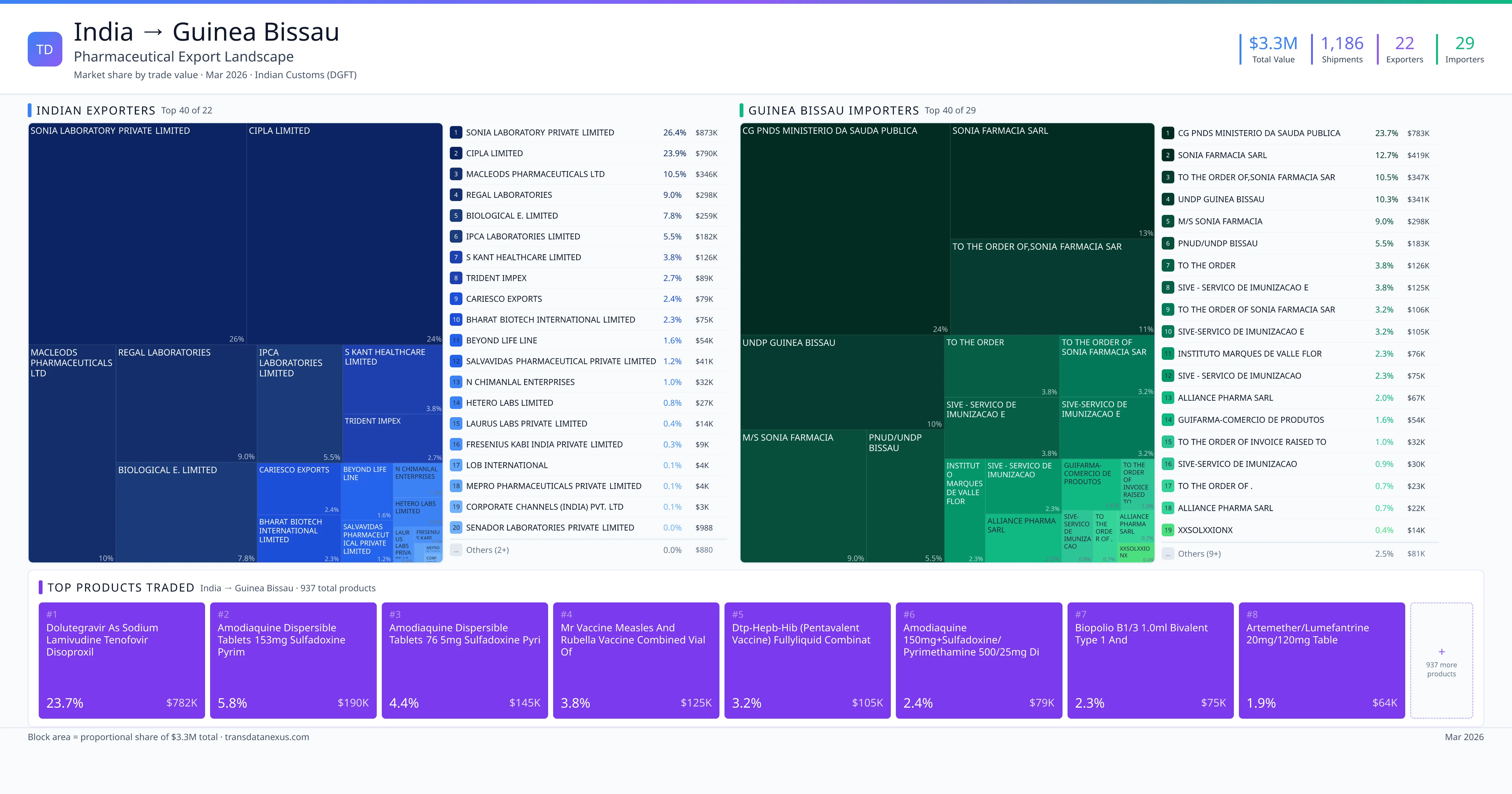
Pharmaceutical shipments from India to Guinea-Bissau primarily utilize sea freight due to its cost-effectiveness for large volumes. The major sea route involves departing from key Indian ports such as Nhava Sheva (JNPT) and Sahar Air Cargo Complex (INBOM4), proceeding through the Arabian Sea, navigating the Red Sea, and entering the Mediterranean Sea via the Suez Canal. From there, vessels continue along the West African coast to reach Guinea-Bissau's main port, Bissau. This journey typically spans approximately 20 to 25 days, depending on specific port operations and weather conditions.
Air freight, while faster, is less commonly used due to higher costs and limited capacity. Air shipments would likely depart from Sahar Air Cargo Complex (INBOM4) in Mumbai, transit through major international hubs, and arrive at Bissau's international airport. The air transit time is considerably shorter, usually around 7 to 10 days, but this method is reserved for urgent or high-value shipments.
Recent disruptions in the Red Sea, such as increased piracy or geopolitical tensions, can significantly impact these sea routes. Such disruptions may lead to longer transit times, rerouting, or increased shipping costs. For instance, in October 2025, the Red Sea experienced heightened security concerns, prompting many shipping companies to adjust their routes or schedules, thereby affecting the overall supply chain efficiency.