Glimepiride HS Code Analysis (2026)
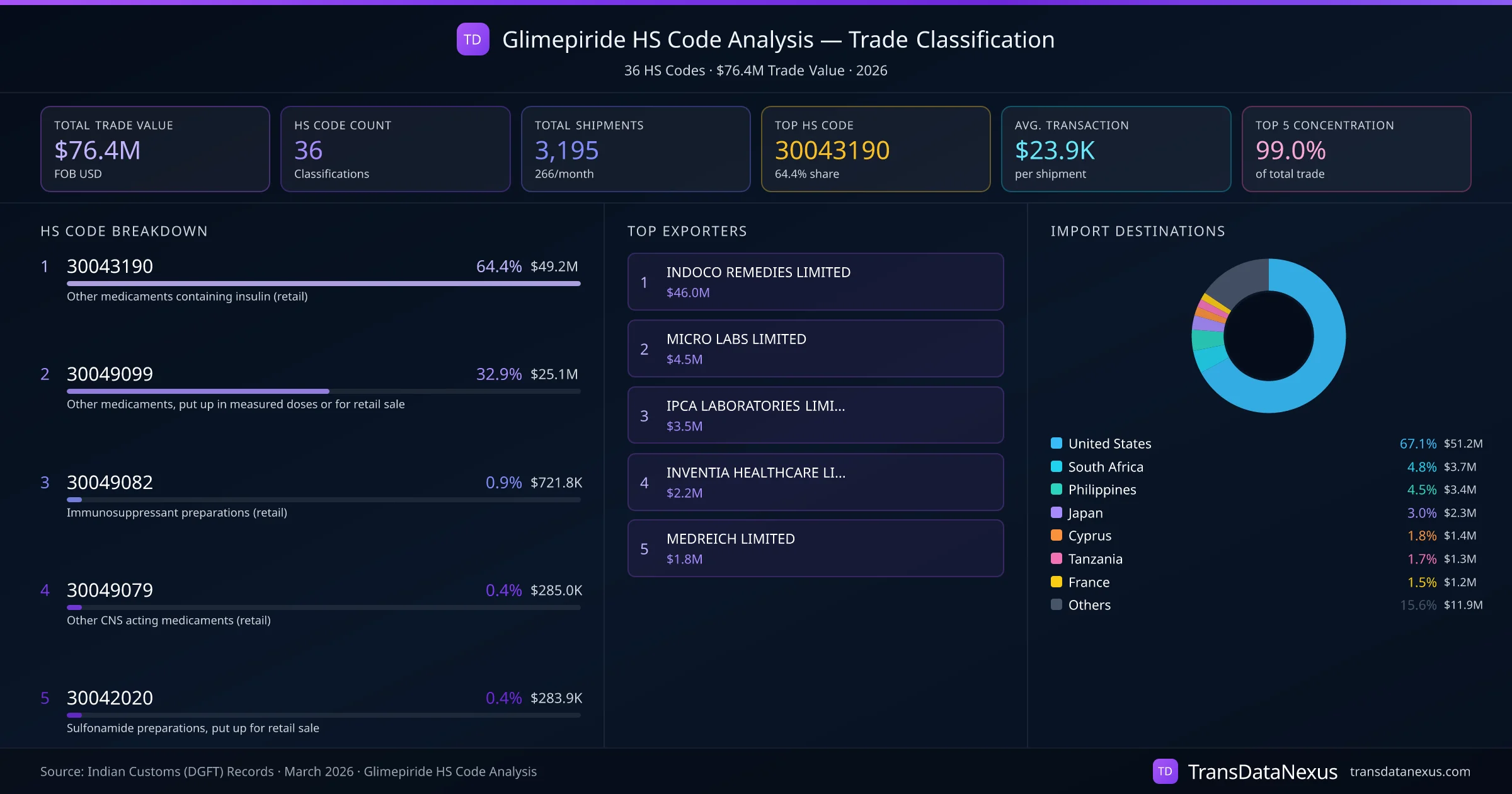
India exports Glimepiride under 36 distinct HS code classifications, representing a total trade value of $76.4M across 3,195 shipments. The dominant classification is HS 30043190 (Other medicaments containing insulin (retail)), accounting for 64.4% of all Glimepiride trade at $49.2M. HS 30049099 (Other medicaments, put up in measured doses or for retail sale) follows at 32.9% ($25.1M). The top 5 HS codes together account for 99.0% of total Glimepiride trade from India. The average transaction value is $23897. Key importing markets include United States, South Africa, Philippines. Leading exporters include INDOCO REMEDIES LIMITED and MICRO LABS LIMITED. Data sourced from Indian Customs (DGFT) shipping bill records.
Source: