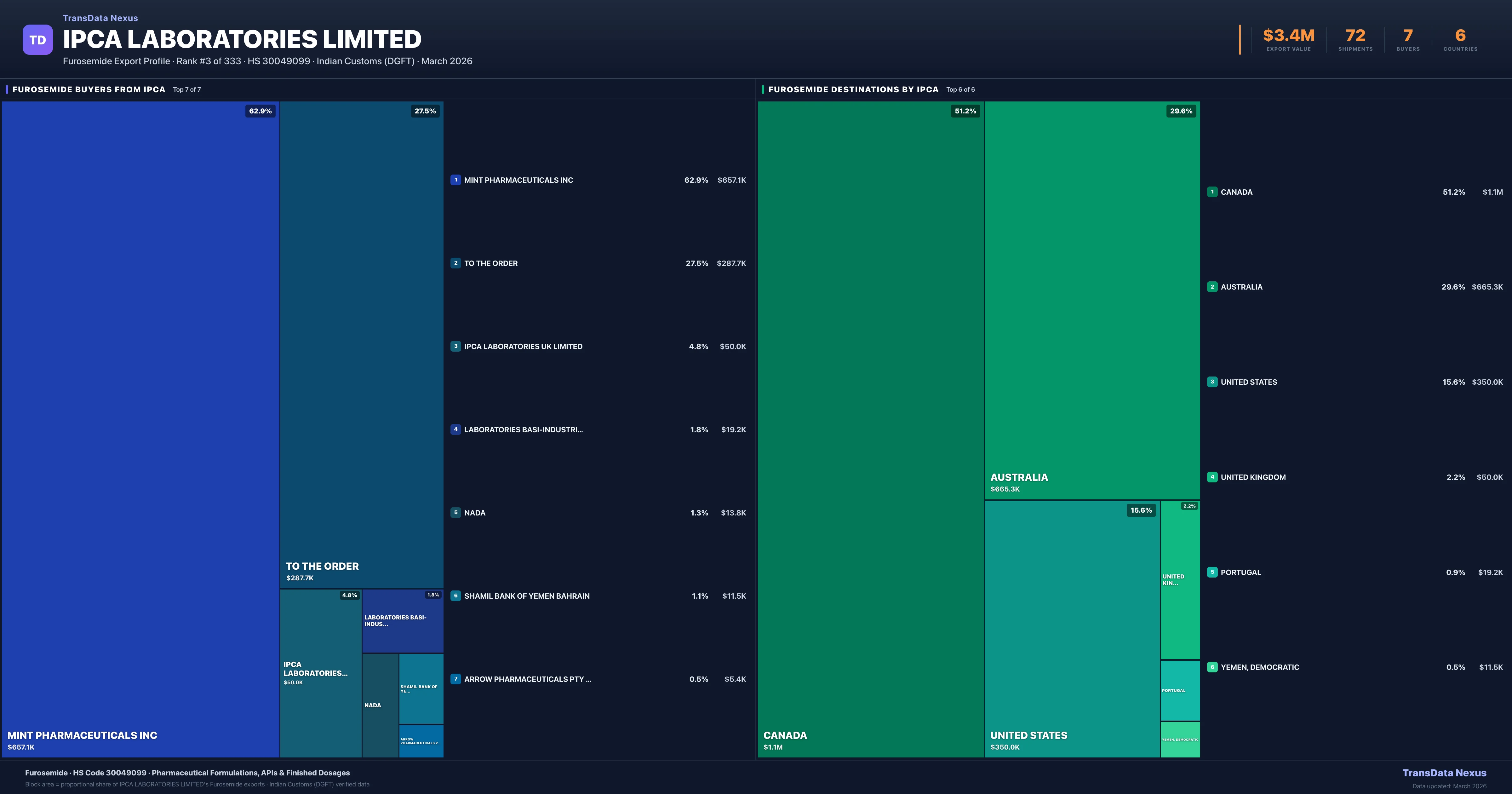
Geopolitical & Trade Policy Impact on Ipca Laboratories Limited's Furosemide Exports
The current geopolitical landscape presents both challenges and opportunities for Indian pharmaceutical exporters like Ipca Laboratories. The ongoing Israel-Iran tensions have heightened security risks in the Strait of Hormuz and the Red Sea–Suez Canal corridor, leading to increased shipping costs and extended transit times for Europe-bound shipments. Major carriers have rerouted vessels around the Cape of Good Hope, adding 10–20 days to transit times and raising freight rates by 40–50% on key India–Europe routes. (livemint.com)
In the U.S., recent import tariffs on pharmaceuticals have introduced additional complexities. While generics remain exempt from the 100% tariffs, any future expansion of the tariff regime to include generics and biosimilars could significantly impact Indian exporters, given that India supplies nearly 40% of U.S. generics. (orfonline.org)
Conversely, the India–European Union Free Trade Agreement (FTA) offers a silver lining. The agreement eliminates tariffs on most European optical, medical, surgical, aircraft, and spacecraft exports to India, and most tariffs, including duties of up to 44% on machinery, 22% on chemicals, and 11% on pharmaceuticals, would be eliminated. (en.wikipedia.org)
Navigating these geopolitical dynamics requires Ipca to adopt a flexible and proactive approach, leveraging opportunities like the India–EU FTA while mitigating risks associated with shipping disruptions and potential tariff escalations.
Ipca Laboratories Limited — Regulatory Compliance & Quality Standards
Maintaining stringent quality standards is paramount for Indian pharmaceutical exporters. Ipca Laboratories has encountered regulatory scrutiny, notably receiving three observations from the U.S. FDA following inspections of its Silvassa facility in April 2023. (business-standard.com) Such observations can impact market access and necessitate prompt corrective actions.
The company has expressed its commitment to addressing these issues and ensuring compliance with international quality standards. Proactive engagement with regulatory bodies and continuous improvement in manufacturing practices are essential for sustaining export growth and maintaining trust with global partners.