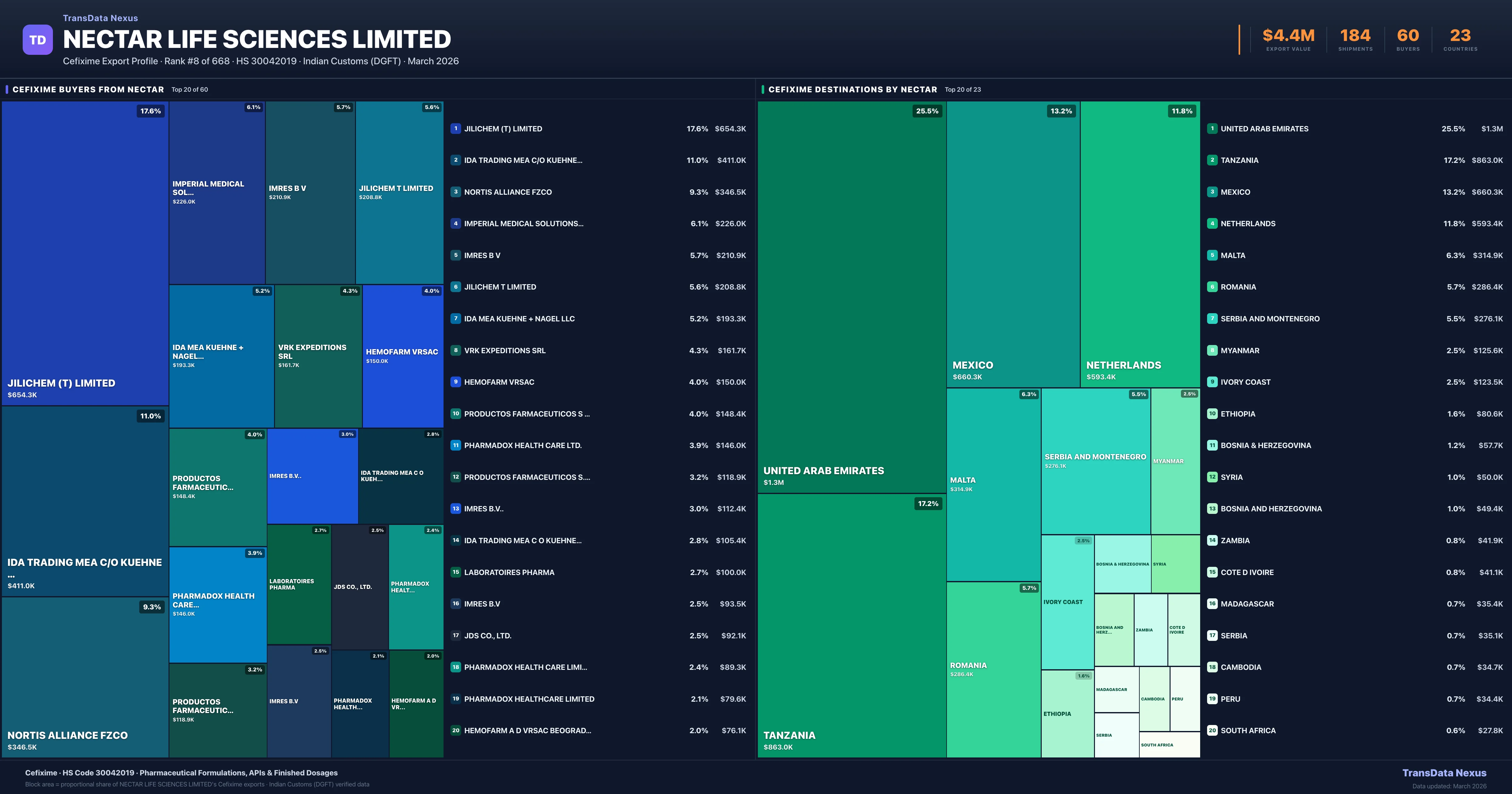
Geopolitical & Trade Policy Impact on Nectar Life Sciences Limited's Cefixime Exports
The current geopolitical landscape presents significant challenges for Indian pharmaceutical exporters like Nectar Life Sciences Limited. The Israel-Iran conflict has led to disruptions in Middle East trade routes, particularly affecting the Red Sea and Suez Canal. These disruptions have resulted in increased shipping costs and extended transit times, posing risks to the timely delivery of pharmaceutical products. The Pharmaceutical Export Promotion Council of India (Pharmexcil) estimates potential losses ranging from ₹2,500 crore to ₹5,000 crore due to these supply chain issues.
In the United States, recent tariff implementations have introduced additional complexities. In August 2025, the U.S. imposed broad tariffs on imports from over 60 countries, including India, with rates reaching up to 39%. These tariffs have significantly impacted Indian pharmaceutical exports, as the U.S. is a major market for generic drugs. The Federation of Indian Export Organisations highlighted that nearly 55% of India's exports to the U.S. are affected, leading to concerns about competitiveness and market access.
Conversely, the India–EFTA Trade and Economic Partnership Agreement (TEPA), effective from October 2025, offers a positive development. This agreement aims to eliminate or reduce tariffs on goods traded between India and EFTA countries (Iceland, Liechtenstein, Norway, and Switzerland), potentially opening new avenues for Indian pharmaceutical exports. However, compliance with stringent EU regulations, such as the Falsified Medicines Directive, remains a critical factor for market entry.
Nectar Life Sciences Limited — Regulatory Compliance & Quality Standards
The regulatory environment for Indian pharmaceutical exporters is becoming increasingly stringent. The U.S. Food and Drug Administration (FDA) has intensified inspections, with over 200 conducted in 2023 and plans to increase this number in 2024. Compliance with Good Manufacturing Practices (GMP) is paramount, as non-compliance can lead to import alerts and suspension of product registrations.
Nectar Life Sciences Limited's recent regulatory setbacks, including the AEMPS' Statement of Non-Compliance and the environmental penalty imposed by the National Green Tribunal, underscore the importance of robust quality assurance systems and environmental compliance. Addressing these issues is crucial for the company to maintain and expand its export markets.